
Arrest Warrants in Greenwood County
An arrest warrant is a judge's order that lets officers take someone into custody. In South Carolina, a magistrate may issue one after the required legal review. State law adds a limit, though: an arrest warrant may not issue unless law enforcement seeks it. A private person who files a sworn allegation is not seeking a warrant in that sense. The statute instead describes a courtesy summons route for that situation. Which process applies depends on the court and the case level. For service-side confirmation in Greenwood County, the Sheriff's Warrant Division is the practical contact. The county publishes no public warrant search form and no complete roster. On the case itself, the issuing court stays in charge of the next step.
How Greenwood County Arrest Warrants Begin
A Greenwood County warrant usually starts when an officer presents the basis for the request to a judicial officer. The judge reviews that legal showing and signs the warrant when the required standard is met. For magistrate matters, S.C. Code §22-5-110 sets out the magistrate's role in causing arrests and examining crimes. A prosecutor does not step in as the issuer. The South Carolina magistrate statute lays out the statewide framework for how these warrants are issued.
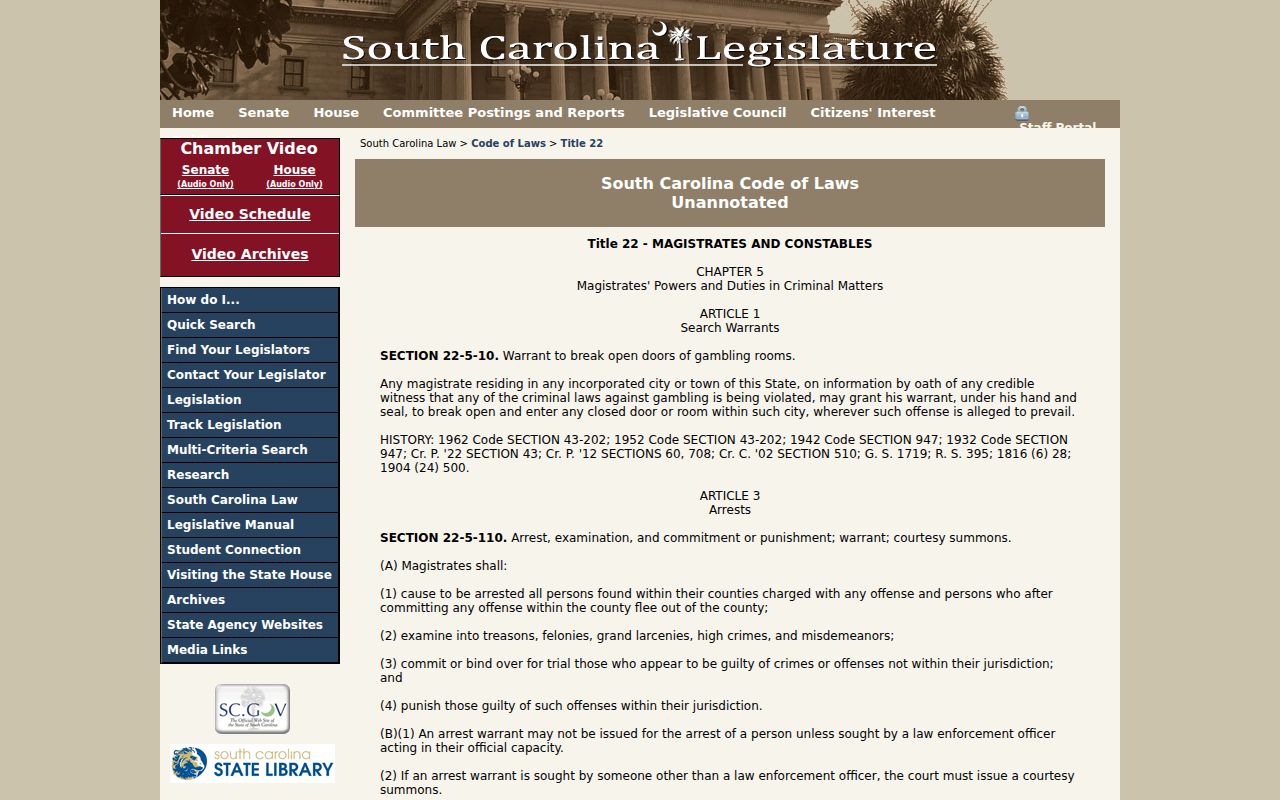
That rule gives statewide context only, and the issuing court can explain what it means for a specific Greenwood County case.
What a Greenwood County Arrest Warrant Contains
South Carolina's warrant form captures a lot: case and warrant identifiers, the court or municipality, subject and agency fields, the offense and statute, a sworn probable-cause narrative, the judge's authorization, and a service return. A public case index may show less than the signed document itself. Greenwood County publishes no local warrant-number pattern, no display schema, and no status glossary. So treat any sample number as a sample, not a real case. Even when a related case shows up in a public search, a sealed or law-enforcement record can stay unavailable.
| Case and court | Shows the file and the judge or court with authority. |
|---|---|
| Offense and statute | Names the allegation and legal section in the form. |
| Affidavit | States the sworn basis reviewed by the judicial officer. |
| Service agency | Identifies the law-enforcement channel assigned to process. |
| Return | Records service or another result after the warrant is sent out. |
| Bond | Depends on the case and court; no Greenwood schedule was located. |
Greenwood County RMS Entry Is Not a Public Search
The Sheriff's Warrant Clerk job description covers entry into RMS and NCIC and the duty to keep warrant information accurate. Those are law-enforcement systems. The public cannot search them, and the Sheriff's website offers no warrant lookup tool. Instead, the public page points to a phone and an email. Call the Warrant Division at (864) 943-8032, or email Matt Murphy at mmurphy@greenwoodsc.gov. The office can route a caller to the right place. Questions about the charge, an appearance date, recall, or case status belong to the issuing court.
Sheriff Warrant Division
Law Enforcement Center, 528 Edgefield Street, Greenwood
(864) 943-8032
How Greenwood County Arrest Warrants Are Served
A warrant travels from the issuing court to an authorized law-enforcement agency for service and return. In Greenwood County, that county channel is the Sheriff's Warrant Division. A city police department may handle municipal process. A federal or interstate matter can pull in a different agency entirely. No local public assignment chart covers every warrant type. After an arrest comes booking and an initial or bond process. The Detention Center can answer custody questions, but it does not decide warrant status or release terms. That remains the court's call. Service or release does not end the underlying prosecution.
Greenwood County City, Circuit, and Federal Service Routes
Which agency serves a warrant depends on jurisdiction and the court process behind it. A city ordinance case may run through the local police department. A General Sessions case sits in the circuit-level criminal system. Federal and out-of-state warrants follow separate authority and procedures. If a notice names a non-county agency, call that court or agency rather than assuming the county sheriff controls everything. Greenwood County names the Sheriff's Warrant Division as its county service channel, but again, no public assignment chart covers every case. When process comes from outside the county, follow the agency stated in the court record.
| Process | Issuing route | Service contact to confirm |
|---|---|---|
| Summary criminal | Greenwood Magistrate | Sheriff Warrant Division or court named in file |
| City ordinance | Greenwood, Ninety-Six, or Ware Shoals Municipal Court | Relevant city police or court |
| General Sessions | South Carolina Circuit Court | Sheriff or another authorized law-enforcement agency |
| Federal | U.S. District Court or federal magistrate judge | U.S. Marshals Service or authorized officer |
Greenwood County Arrest Warrant vs Summons vs Bench Warrant
These terms describe different events. An arrest warrant follows judicial review of a sworn basis for custody. A summons just directs a person to appear. Miss that date, and the court can issue a bench warrant tied to the existing case. A bench warrant is therefore not a new charge. It follows a missed court requirement. Before asking about bond or a new date, Greenwood County readers should pin down which document the court actually issued. That single fact shapes every question that follows.
| Process | Purpose | First question |
|---|---|---|
| Arrest warrant | Authorizes custody on a reviewed allegation. | Which court issued it, and what are the bond terms? |
| Summons | Orders appearance at a stated date and place. | When and where must the person appear? |
| Bench warrant | May follow a missed setting or court order. | Can the court reset, recall, or schedule an appearance? |
Sealed Greenwood County Arrest Warrants May Stay Private
South Carolina grand-jury indictments can stay sealed until the defendant is in custody or released, with disclosure allowed for issuing and executing process. An expected case may not show up in a routine name search before an arrest. Juvenile records and some law-enforcement material carry their own access limits. A blank Public Index result does not prove that no arrest warrant exists. The clerk, the solicitor, a warrant officer, or an attorney can explain which route fits a particular file.
Do not treat a public search result as the full case file. Some records may be sealed or withheld by law.
What to Do If There’s a Greenwood County Warrant for You
Skip the third-party sites and don't walk into the jail blind. Instead, call the Warrant Division and the issuing court, confirm any bond details or surrender arrangements, and ask whether an attorney should set up the next step. Greenwood County posts no walk-in hours, no set bond amount, and no same-day recall promise, so get instructions first.
Talk to counsel before appearing. Ask which court issued the warrant, what the case number is, and whether the court wants a motion, bond, or planned appearance.
Once a Greenwood County court acts, get the recall order, receipt, or new status in writing. A release from custody does not close the case or end later court dates.
Greenwood County Arrest Warrant Bond Depends on the Case
The state’s bond law, South Carolina Title 17, Chapter 15, governs recognizance, surety, cash deposits, bond validity, and forfeiture. Greenwood’s magistrates set bond case by case, and Greenwood County publishes no bond schedule, jail payment form, or full list of accepted methods. For a specific bond, ask the court or Bond Court where and how to post it.
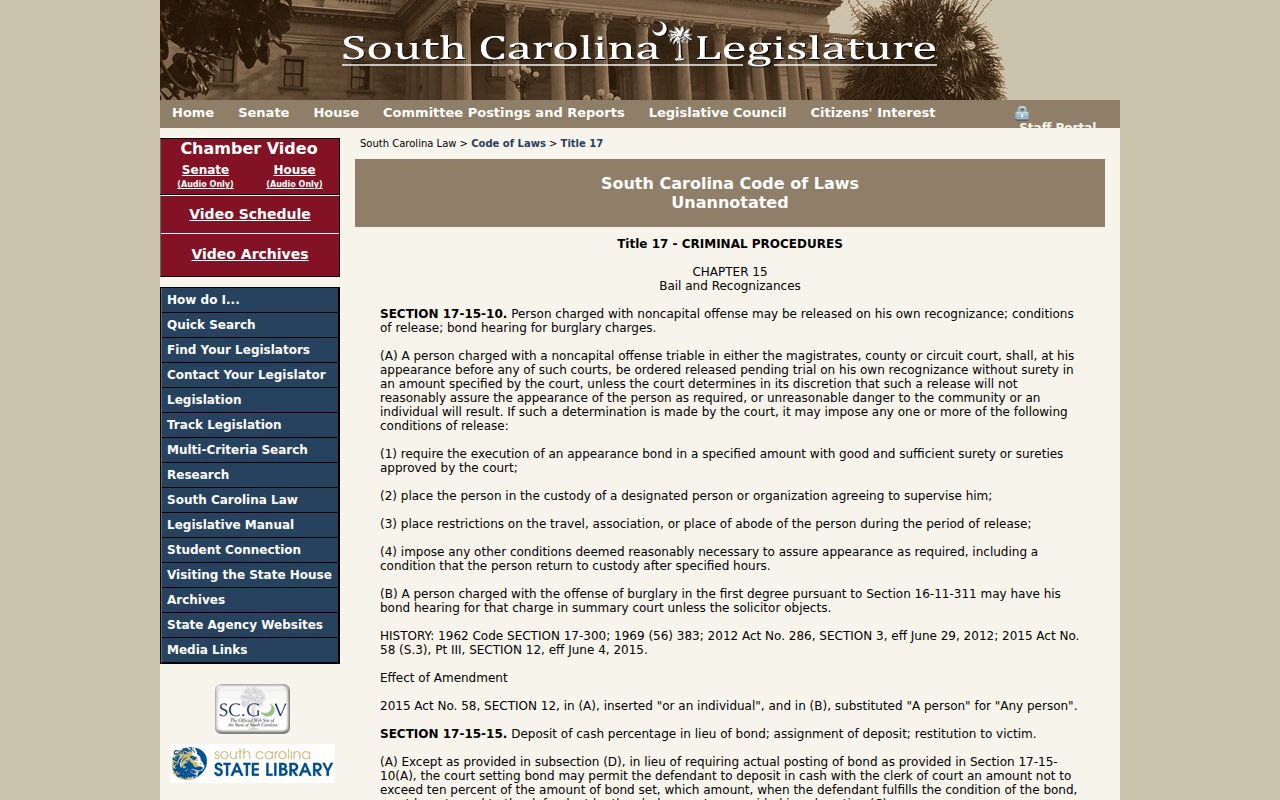
Confirm the amount, terms, and current status with the issuing court before arranging payment.